🎥 Cloud Native Core
Nubenetes V2 Elite Portal
You are browsing the AI-Curated V2 Elite Edition. Looking for the exhaustive list of references? Check out the V1 Historical Archive.
Welcome to the Cloud Native Core section of the V2 Video Hub. Explore curated high-density videos with architectural summaries.
Kubernetes
🎬 Kubernetes for SysAdmins | Kelsey Hightower at PuppetConf | Talk & Demo
Architectural Summary
This seminal presentation outlines the paradigm shift from traditional imperative configuration management to declarative, container-orchestrated infrastructure by redefining the operating contract between applications and underlying systems. Viewed from a 2026 cloud-native perspective, Kelsey Hightower's early demonstrations of self-healing workloads, automated bin-packing, and custom controllers for automated TLS provisioning serve as the foundational blueprint for modern platform engineering. The architectural concepts covered—specifically decoupling stateful storage and leveraging native service discovery—remain highly relevant for engineers transitioning from static sysadmin practices to dynamic API-driven control loops.

🎬 Keynote: 7 Years of Running Kubernetes for Mercedes-Benz
Architectural Summary
This architectural retrospective outlines Mercedes-Benz's transformation from legacy, manual infrastructure management to an on-premises, self-service cloud platform managing nearly 1,000 clusters via Cluster API (CAPI). In a 2026 cloud-native context, it demonstrates the vital patterns for scaling declarative cluster lifecycle management and shifting traditional enterprise operations toward platform engineering model. The session highlights how organizational resilience, open-source alignment, and robust automation topologies can successfully modernize highly regulated corporate data centers.
🎬 AKS vs AKS Local vs OpenShift: Choosing Your Enterprise Kubernetes Platform
Architectural Summary
This architectural comparison evaluates enterprise Kubernetes deployment models across managed public cloud (AKS Cloud), hybrid edge data centers (AKS Local via Azure Arc), and fully integrated enterprise distributions (Red Hat OpenShift). It establishes decision boundaries based on Day-2 operational maintenance capacity, automated node scaling, strict data sovereignty requirements, and out-of-the-box regulatory compliance guardrails.
🎬 SUSE Rancher vs VMware Tanzu: Multi-Cloud vs Private Cloud Kubernetes
Architectural Summary
This architectural comparison evaluates SUSE Rancher versus VMware Tanzu for enterprise Kubernetes fleet governance across hybrid and distributed environments. While SUSE Rancher delivers a vendor-neutral, multi-cloud control plane capable of managing any CNCF-certified cluster across hyperscalers and bare-metal edge deployments, VMware Tanzu provides deep hypervisor-level integration with vSphere and ESXi to transform traditional private data centers into cloud-native platforms.
🎬 VMware Tanzu vs vSphere Kubernetes Service (VKS): Enterprise Modernization [Short]
Architectural Summary
This architectural breakdown analyzes how vSphere Kubernetes Service (VKS) and VMware Tanzu bridge enterprise virtualization and cloud-native container runtimes. While VKS embeds native Kubernetes compute directly into the ESXi hypervisor layer, Tanzu delivers centralized multi-cluster fleet governance, developer self-service abstractions, and policy enforcement across hybrid environments. In a 2026 enterprise strategy, this decoupled paradigm enables organizations to modernize legacy virtualization footprints into scalable Kubernetes platforms while preserving mature operational tooling.
🎬 How to Choose Your Azure Container Strategy: ACI, ACA, AKS Automatic & Standard
Architectural Summary
This architectural decision framework maps Azure's container compute continuum, evaluating trade-offs between operational abstraction and infrastructure control. It contrasts serverless task execution via Azure Container Instances (ACI) and event-driven microservices on Azure Container Apps (ACA) against Kubernetes-native options, highlighting AKS Automatic with Karpenter-driven node autoprovisioning alongside AKS Standard for deep networking and daemonset governance. This guide equips cloud architects to right-size orchestration complexity, optimize operational overhead, and enforce cloud-native workload isolation.
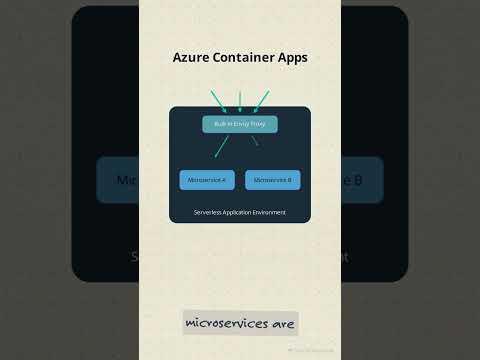
🎬 AKS vs Azure Container Apps: The Cost of Control & Scale-to-Zero FinOps
Architectural Summary
This architectural comparison analyzes the FinOps trade-offs between hosting variable retail workloads on Azure Kubernetes Service (AKS) versus Azure Container Apps (ACA). It highlights the costly 'idle tax' inherent to running baseline 24/7 AKS worker node pools compared to ACA's event-driven, scale-to-zero model powered by KEDA during zero-traffic windows. For modern cloud platforms, this distinction establishes crucial decision criteria for balancing deep infrastructure control against serverless, consumption-based cost efficiency.
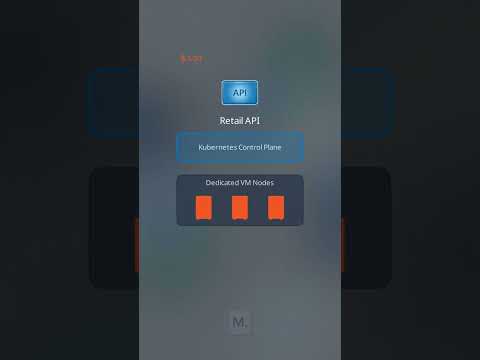
🎬 Azure Containers Explained: Developer Velocity vs Infrastructure Governance
Architectural Summary
This architectural comparison evaluates the strategic trade-offs between Azure Container Apps (ACA) and Azure Kubernetes Service (AKS) for enterprise container deployments. ACA maximizes developer velocity through serverless abstraction and simplified operational overhead, whereas AKS delivers granular control over node topology, fine-grained network isolation, and strict enterprise security governance.
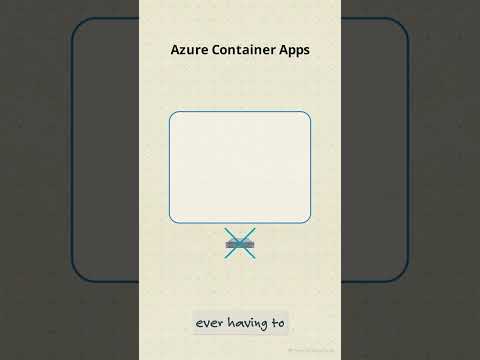
🎬 AKS vs AKS Local vs OpenShift: Enterprise Kubernetes Strategy & Hybrid Cloud
Architectural Summary
This architectural guide navigates the enterprise container orchestration spectrum across Azure Container Apps, AKS Automatic, AKS Standard, AKS Local, and Azure Red Hat OpenShift (ARO). It evaluates the trade-offs between granular control-plane access and managed operational simplicity, spotlighting Karpenter-driven Node Autoprovisioning, Arc-enabled hybrid edge consistency, and opinionated DevSecOps platforms. The framework equips cloud architects with a structured decision matrix to optimize Day-2 operational overhead, compliance, and FinOps across hybrid and multicloud topologies.
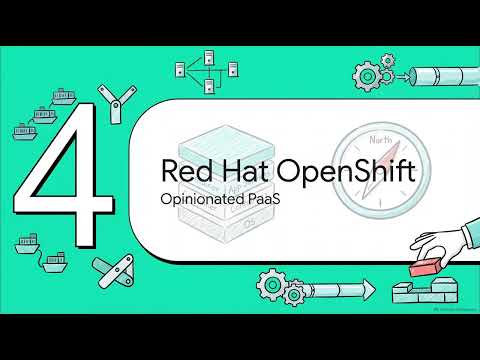
🎬 Control vs Productivity: AKS, OpenShift, Tanzu & Rancher Multi-Distro Matrix
Architectural Summary
This architectural breakdown navigates enterprise container adoption by evaluating the spectrum between developer-focused serverless platforms (Azure Container Apps with KEDA and Dapr) and granular infrastructure engines like AKS, OpenShift, VMware Tanzu, and SUSE Rancher. It frames the selection process as an operational contract, analyzing trade-offs across Day-2 operations, custom CNI/service mesh governance, and automated node provisioning. For cloud architects designing multi-cloud fleets, it provides a structured decision framework balancing developer velocity against infrastructure isolation and platform engineering overhead.
🎬 Nubenetes Enterprise Kubernetes Platforms: AKS, OpenShift, Tanzu & Rancher
Architectural Summary
This architectural comparison evaluates enterprise Kubernetes distributions—including AKS (Standard/Automatic), AKS Local via Azure Arc, Red Hat OpenShift (ARO), VMware Tanzu (VKS), and SUSE Rancher (RKE2)—across hybrid, sovereign, and public cloud environments. It analyzes the critical trade-offs between managed API abstraction and bare-metal control, focusing on Day-2 operations, multi-cluster fleet GitOps synchronization, and hardware hypervisor integration. Designed for modern multi-cloud architectures, it provides decision frameworks for balancing regulatory sovereignty, platform operational overhead, and unified enterprise DevSecOps governance.
🎬 Kubernetes Autoscaling Architecture: Layer 1 Workload vs. Layer 2 Infrastructure Deep Dive
Architectural Summary
This architectural breakdown examines the operational decoupling between Layer 1 workload scaling (HPA, VPA, KEDA) and Layer 2 infrastructure provisioning (Cluster Autoscaler, Karpenter). It details how node bin-packing decisions drive cloud spend based strictly on pod resource requests rather than real-time utilization, leading to artificial capacity scale-outs. For modern cloud-native architectures, mastering this interaction pipeline—from Metrics Server polling loops to scheduler predicates—is essential for eliminating stranded capacity and ensuring resilient cluster scaling.
🎬 How to Autoscale Kubernetes Microservices: HPA vs. VPA vs. KEDA [Short]
Architectural Summary
This architectural guide establishes a practical workload autoscaling decision matrix for Kubernetes microservices by evaluating HPA, VPA, and KEDA against distinct traffic profiles. It highlights HPA for steady-state CPU/memory-based scaling, KEDA for reactive event-driven patterns with true scale-to-zero capabilities (such as Kafka lag and SQS queues), and VPA for rightsizing baseline pod allocations in batch or monolithic workloads. In modern cloud native platform engineering, correctly pairing these mechanisms optimizes compute unit economics while mitigating pod evictions and latency spikes.
🎬 Why Karpenter Beats Cluster Autoscaler: Dynamic Node Provisioning & Speed [Short]
Architectural Summary
Karpenter fundamentally improves Kubernetes node provisioning by bypassing rigid cloud provider Auto Scaling Groups (ASGs/VMSS) and directly calling cloud APIs to provision right-sized compute in 45–90 seconds based on pending pod requirements. Its group-less architecture enables dynamic selection of heterogeneous CPU, memory, and accelerator instances while continuously executing multi-node consolidation to minimize cluster fragmentation. For modern platform engineering and FinOps strategies, this dynamic consolidation ensures optimal resource utilization, fast burst handling, and immediate infrastructure cost reduction.

🎬 How In-Place Pod Resizing Stops Kubernetes Waste: VPA Without Evictions [Short]
Architectural Summary
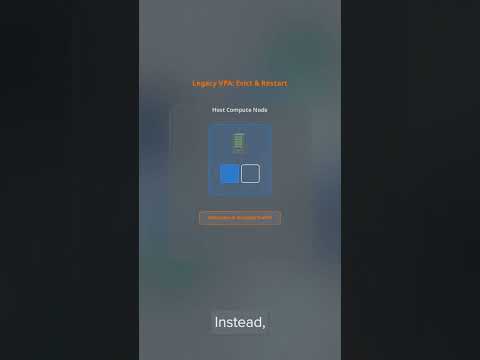
This architectural breakdown explores Kubernetes in-place pod resizing, demonstrating how mutating CPU and memory allocations via the /resize subresource eliminates workload evictions and restarts traditionally required by Vertical Pod Autoscalers. By enabling non-disruptive, telemetry-driven container adjustments, platform teams can safely eradicate speculative buffer overprovisioning and reclaim up to 40% of stranded node memory. For modern cloud-native FinOps strategies, this mechanism bridges the divide between real-time resource rightsizing and high-availability workload SLAs.
🎬 Karpenter vs. Cluster Autoscaler: Deep Dive on Node Autoscaling & Consolidation
Architectural Summary
This architectural analysis contrasts traditional Auto Scaling Group-bound Cluster Autoscalers with the group-less, API-driven provisioning engine of Karpenter. It demonstrates how bypassing node pool abstractions cuts scale-up latency to under 90 seconds while dynamically matching pod compute requests across diverse instance types and Spot-to-On-Demand fallbacks. Additionally, it highlights continuous bin-packing consolidation mechanics governed by PodDisruptionBudgets to drive cloud infrastructure optimization and FinOps efficiency.

🎬 Production Guardrails for Kubernetes Autoscaling: Anti-Conflict Rules & FinOps
Architectural Summary
This architectural guide details essential anti-conflict patterns and governance rules required to run multi-tier Kubernetes autoscaling reliably at enterprise scale. It outlines prevention strategies against destructive feedback loops between HPA and VPA, enforces strict single-ownership controllers, and establishes FinOps boundaries using explicit replica caps and resource requests. Crucially, it highlights the operational necessity of PodDisruptionBudgets (PDBs) to ensure automated node consolidation tools like Karpenter maintain workload availability without runaway cloud costs.
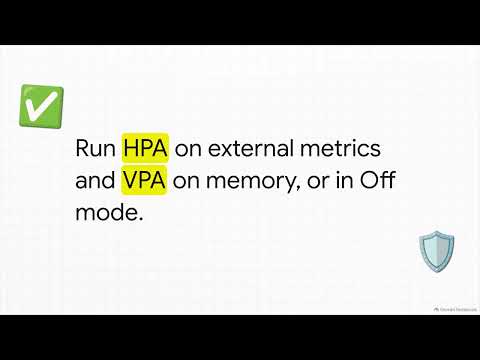
🎬 Modern Kubernetes Autoscaling Guide: HPA, VPA, KEDA, Knative, CA & Karpenter
Architectural Summary
This architectural guide details a complete multi-tier Kubernetes autoscaling framework, contrasting Layer 1 workload mechanics (HPA, VPA with in-place pod resizing, KEDA event triggers, and Knative request-concurrency panic loops) against Layer 2 infrastructure provisioning with Cluster Autoscaler and group-less Karpenter. It highlights critical trade-offs in reaction speeds, proactive ML-based forecasting, and anti-conflict guardrails such as PodDisruptionBudgets and resource quotas. In modern cloud-native architectures, this synthesis provides platform teams with an essential blueprint to eliminate cold starts and align workload responsiveness directly with FinOps cost optimization.
🎬 Nubenetes Kubernetes Autoscaling: HPA, VPA, KEDA, Knative & Karpenter Guide
Architectural Summary
This architectural guide details multi-tier Kubernetes elasticity across Layer 1 workload autoscaling (HPA, in-place VPA resize, KEDA event-driven scale-to-zero, and Knative) and Layer 2 node provisioning using Karpenter and Cluster Autoscaler. It provides production-tested patterns to prevent HPA-VPA resonance feedback loops, leverage predictive time-series forecasting, and enforce robust PodDisruptionBudget safeguards for cloud-native platforms operating at hyperscale.
Red Hat OpenShift
🎬 Thursday morning general session - May 9 - Red Hat Summit 2019
Architectural Summary
This session outlines the architectural deployment of Red Hat OpenShift as a unified hybrid cloud platform, demonstrating how enterprise Kubernetes orchestrates complex workloads across multi-cloud and edge environments. It highlights critical integrations with GPU acceleration and AI/ML pipelines, establishing a robust blueprint for modern MLOps and scalable cloud-native operations.
🎬 Red Hat OpenShift Platform Plus - Overview
Architectural Summary
Red Hat OpenShift Platform Plus provides an enterprise-grade, multi-cluster Kubernetes foundation integrating advanced cluster management, declarative DevSecOps security, and a global container registry. In a 2026 cloud-native landscape, it delivers a unified platform engineering control plane that simplifies multi-cloud operations while enforcing consistent governance and security policies from core to edge. This suite accelerates secure software delivery pipelines by embedding automated compliance and threat protection directly into the application lifecycle.

🎬 Nubenetes OpenShift 4.20 Installation (Day 0 to Day 2) (Playlist)
Architectural Summary
Comprehensive Day 0 to Day 2 architecture for Red Hat OpenShift 4.20 across bare metal, VMware, Nutanix, and Hyper-V. Covers OpenShift Installer paradigms (ABI, IPI, UPI, Rendezvous Node, static NMState), SNO, HyperShift (HCP), ZTP, air-gapped mirroring, Gateway API traffic engineering, Istio Ambient Service Mesh (OSSM 3.0), Day 1 hardening, etcd emergency recovery, OADP, and GitOps fleet management.
🎬 Nubenetes OpenShift Legacy Java and Air-Gapped Migration (Playlist)
Architectural Summary
Air-gapped OpenShift architectures, legacy J2EE lift-and-shift container modernization, and zero-trust database routing in disconnected environments.
Platform Engineering
🎬 What is Platform Engineering and how it fits into DevOps and Cloud world
Architectural Summary
This video details the evolution of cloud operations into Platform Engineering, focusing on the architecture and implementation of Internal Developer Platforms (IDPs) to mitigate developer cognitive load. By establishing standardized 'golden paths' through Infrastructure as Code (IaC) and self-service APIs, organizations can balance developer autonomy with rigorous governance, security, and compliance. This paradigm shift optimizes resource provisioning and modernizes DevOps workflows for highly scalable, cloud-native environments.

Ruby on Rails
🎬 David Heinemeier Hansson: Microservices vs. Monolith
Architectural Summary
In this discussion, David Heinemeier Hansson critiques the dogmatic adoption of microservices, highlighting how they introduce substantial operational complexity, network latency, and cognitive load compared to a well-structured monolith. He champions the 'Majestic Monolith' as a pattern that maximizes developer velocity and reduces organizational overhead by keeping the deployment domain unified. For modern cloud-native architectures, this perspective serves as a crucial counterweight to microservice fatigue, driving the industry toward highly-optimized modular monoliths that simplify infrastructure and cut cloud spend.
Ruby on Rails Hotwire
🎬 The creator of Rails on JavaScript FE vs. Classic Server-side Rendering
Architectural Summary
David Heinemeier Hansson critiques the complexity of modern Single Page Application (SPA) architectures, advocating instead for the 'Majestic Monolith' and HTML-over-the-wire (Hotwire) to keep application logic unified on the server. In a 2026 cloud-native context, this paradigm challenges the overhead of decoupled micro-frontends by proving that server-side rendering (SSR) combined with lightweight HTML streaming dramatically simplifies deployment pipelines, reduces client-side resource consumption, and lowers data egress costs. This architectural approach optimizes for operational efficiency, enabling smaller engineering teams to build highly responsive, production-grade applications without managing complex API contract synchronizations.
OpenShift
🎬 Kubernetes vs. OpenShift: Choosing DevOps and CI/CD Workflows
Architectural Summary
This panel discussion features Ray Abaid detailing the core operational and architectural differences between running vanilla Kubernetes and Red Hat OpenShift. While Kubernetes provides the foundational container scheduling and cluster connectivity, OpenShift layers pre-integrated operators, automated build pipelines, and enterprise-grade security out of the box. For platform teams, this comparison highlights how choosing between the modularity of raw Kubernetes and the unified developer experience of OpenShift directly impacts delivery velocity and day-2 maintenance overhead.
🎬 Fran Heeran, Red Hat | Red Hat Summit 2026
Architectural Summary
In this Red Hat Summit 2026 interview, Fran Heeran details how telecommunications providers are shifting from heavily siloed infrastructure to unified cloud-native architectures. By leveraging OpenShift Virtualization, telcos can centrally manage both legacy virtual machines and modern containers across core networks and the far edge, accelerating deployments up to 50%. This unified architecture additionally enables sovereign cloud offerings and closed-loop network automation by feeding AI outputs directly into Ansible-driven remediation workflows.
Portworx
🎬 Murli Thirumale | KubeCon CloudNativeCon EU 2023
Architectural Summary
This discussion outlines how enterprise platform engineering teams leverage Portworx to deliver automated, resilient Database-as-a-Service (DBaaS) capabilities directly on Kubernetes. By abstracting multi-cloud storage, disaster recovery, and data security, it highlights architectural strategies essential for scaling stateful cloud-native workloads. For a 2026 cloud-native landscape, these unified data management planes are critical for mitigating multi-cloud lock-in, controlling cloud spend, and accelerating application delivery.

Modular Monoliths
🎬 ¿De verdad son necesarios los microservicios? [SPANISH CONTENT]
Architectural Summary
This video critically evaluates the over-engineering of distributed systems, examining whether the operational overhead, network latency, and complexity of microservices are justified for most projects. In a 2026 cloud-native landscape focusing heavily on cost optimization and developer velocity, it advocates for a pragmatic, domain-driven approach, highlighting modular monoliths as a powerful alternative before prematurely adopting microservices.
Istio Ambient Mesh and OpenShift
🎬 Nubenetes Istio Ambient Mesh and Gateway API on OpenShift (Playlist)
Architectural Summary
Architectural masterclasses and technical video shorts on Red Hat OpenShift Service Mesh 3.0 (OSSM 3), Istio Ambient Mesh, sidecarless zero-trust networking with Rust ztunnel (HBONE mTLS on port 15008), L7 Waypoint proxies, and Kubernetes Gateway API (HTTPRoute, GRPCRoute, TLSRoute) across 12 enterprise decision scenarios.
Git
🎬 Branching Strategies Explained
Architectural Summary
This guide provides a comprehensive architectural evaluation of various Git branching strategies, including Trunk-Based Development, Feature Branches, Git Flow, and Environment Branches, weighing their impacts on delivery velocity. For a 2026 cloud-native landscape, it emphasizes how moving toward trunk-based development or short-lived feature branches is essential for optimizing continuous integration (CI) pipelines, minimizing integration debt, and enabling rapid, automated deployments to Kubernetes and cloud environments.
Distributed Systems Strategy
🎬 Elon Musk talks Twitter, Tesla and how his brain works — live at TED2022
Architectural Summary
This systemic interview highlights architectural principles around open-sourcing core algorithms to enforce platform transparency and trust, directly paralleling modern GitOps, policy-as-code, and zero-trust verification frameworks in Cloud Native environments. Additionally, the insights on extreme manufacturing automation offer critical design lessons for 2026 edge computing, emphasizing the necessity of closed-loop automation, event-driven orchestration, and radical simplification of complex distributed infrastructures.

Hosted Control Planes
🎬 GitOps Guide to the Galaxy: Hosted Control Planes (HyperShift)
Architectural Summary
This session from the GitOps Guide to the Galaxy deconstructs the architecture of Hosted Control Planes (HCP), also known as HyperShift. It explores how HCP decouples the Kubernetes control plane from worker nodes, hosting it as a scalable workload on a management cluster to drastically reduce operational overhead, improve provisioning speed, and optimize resource utilization. For 2026 platform engineering, mastering this pattern is essential for managing large-scale, multi-tenant Kubernetes fleets with high-density efficiency and strong isolation.
eBPF and Service Mesh
🎬 Nubenetes Service Mesh vs. Kernel eBPF (OBI) (Playlist)
Architectural Summary
Architectural comparison, trade-offs, and production synergies between Service Meshes (Istio Ambient, Envoy, Cilium Mesh) and Kernel-level eBPF Instrumentation (OpenTelemetry OBI). Examines why network perimeters fail at local application log correlation and how kernel syscall interception bridges distributed traces and stdout logs with zero code changes.
Multi-Distribution Kubernetes
🎬 Nubenetes Multi-Distro Kubernetes and Portable Ingress (Playlist)
Architectural Summary
Portable Helm architecture, multi-distribution Kubernetes (OpenShift, RKE2, K3s, kubeadm, Tanzu), air-gapped ingress, MetalLB/Cilium networking, and HashiCorp Vault External Secrets.
Google Cloud and GKE
🎬 Nubenetes Google Cloud (GCP) and GKE Architecture (Playlist)
Architectural Summary
Enterprise Google Cloud Platform (GCP) and Google Kubernetes Engine (GKE) architecture, Golden Path blueprints, Workload Identity Federation, and automated deployments.
Azure Container Apps vs AKS
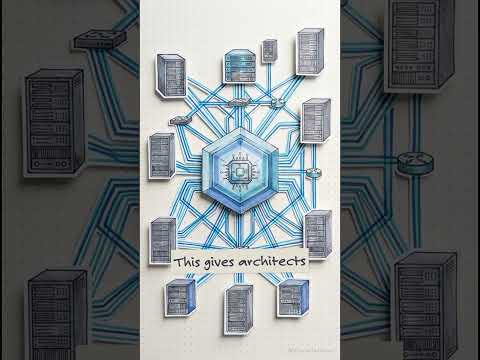
🎬 Azure Container Apps vs AKS: The 5 Enterprise Evaluation Dimensions
Architectural Summary
This architectural breakdown delineates a strategic decision matrix between Azure Container Apps (ACA) and Azure Kubernetes Service (AKS) across five critical enterprise dimensions: application complexity, scaling dynamics, DevOps operational burden, ecosystem extensibility, and engineering maturity. It highlights how serverless container abstraction minimizes Day-2 operational overhead for stateless microservices while full-fledged Kubernetes remains essential for complex stateful topologies, custom CRDs, and fine-grained cluster control.
Azure Container Apps AKS
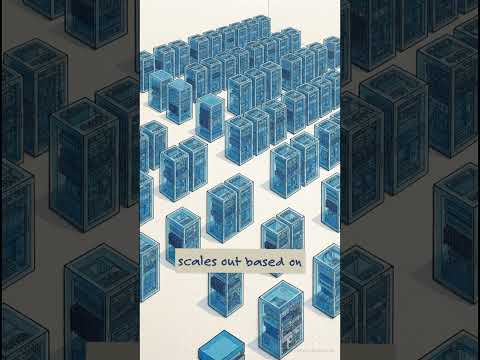
🎬 Azure Container Apps vs AKS Architecture: Subnet Delegation & Network Isolation
Architectural Summary
This architectural comparison evaluates enterprise network isolation patterns between Azure Container Apps (ACA) and Azure Kubernetes Service (AKS). It analyzes how ACA simplifies operational overhead through dedicated subnet delegation, automated mTLS, and managed internal Envoy ingress, contrasted against AKS's granular, high-control model using Azure CNI Overlay and Cilium or Calico network security policies for complex microsegmentation.
Azure Containers ACI ACA AKS
🎬 Picking the Right Azure Container Service: ACI vs ACA vs AKS Control Spectrum
Architectural Summary
This architectural decision guide maps the control and operational overhead trade-offs across Azure Container Instances (ACI), Azure Container Apps (ACA), and Azure Kubernetes Service (AKS). It delineates optimal workload placement by recommending ACI for isolated, bursty batch tasks, ACA for serverless microservices powered by built-in Dapr and KEDA autoscaling, and AKS for complex platforms demanding custom daemonsets, operators, and granular cluster configuration.
Azure Kubernetes Service and Azure Container Apps
🎬 The Hybrid Azure Container Strategy: Combining Container Apps & AKS Core [Short]
Architectural Summary
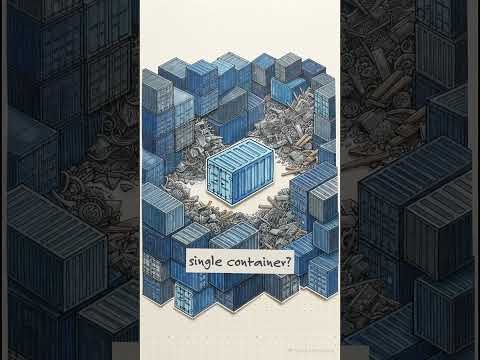
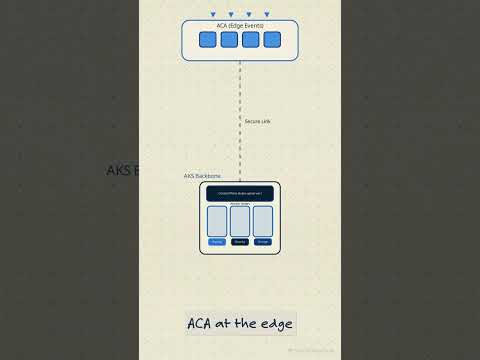
This architectural brief outlines a hybrid Azure container strategy that replaces the binary trade-off between Azure Container Apps (ACA) and Azure Kubernetes Service (AKS). By decoupling customer-facing, event-driven microservices onto ACA for serverless elasticity while reserving AKS for high-throughput stateful data services and specialized workloads, platform teams maximize developer velocity without sacrificing infrastructure control. In a 2026 cloud-native context, this pattern establishes an optimal tiering model that balances operational simplicity with deep Kubernetes cluster customization.
Azure Container Apps KEDA
🎬 How Azure Container Autoscaling Works: KEDA Queue Scaling vs Cluster Autoscaler
Architectural Summary
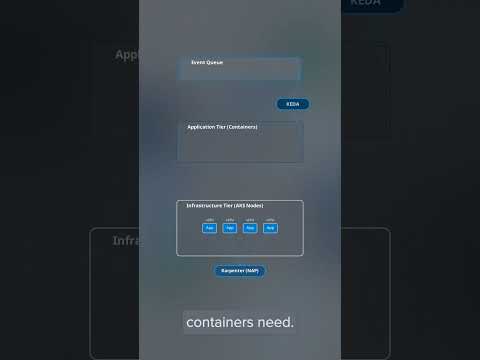
This architectural breakdown contrasts traditional reactive Horizontal Pod Autoscalers (HPA) relying on lagging CPU and memory metrics against preemptive event-driven autoscaling powered natively by KEDA in Azure Container Apps. By evaluating upstream signals such as message queue depth, HTTP concurrency, and Kafka consumer lag, platforms can scale container instances dynamically before resource saturation induces latency spikes. In modern cloud-native architectures, this event-driven paradigm is critical for orchestrating responsive, cost-optimized microservices and asynchronous distributed workloads.
Azure Container Apps
🎬 Why Azure Container Apps Blocks Custom Operators: CRDs & API Abstraction Walls
Architectural Summary
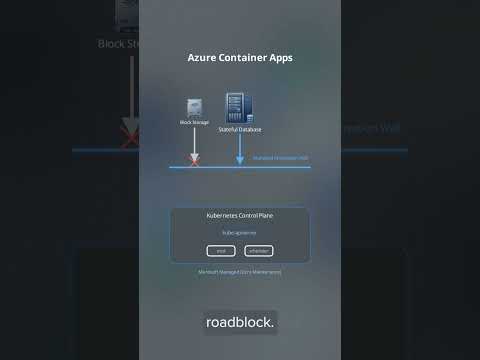
This architectural breakdown examines the deliberate Kubernetes API abstraction boundary within Azure Container Apps (ACA), explaining why access to the kube-apiserver is restricted to block Custom Resource Definitions (CRDs) and custom operators. It highlights that stateful workloads dependent on specialized storage controllers, custom CSI drivers, and automated database failover operators fundamentally require the control-plane access provided by Azure Kubernetes Service (AKS). Consequently, platform engineers must weigh ACA's simplified operational overhead against AKS's extensibility when designing cloud-native application runtimes.
Azure Containers AKS ACA ACI
🎬 Azure Container Strategy: ACI vs ACA vs AKS Architectural Decision Guide
Architectural Summary
This architectural guide dissects Azure's container hosting landscape, establishing clear boundaries between Azure Container Instances (ACI), Azure Container Apps (ACA), and Azure Kubernetes Service (AKS). It details how to balance operational overhead against cluster control by leveraging ACI for isolated ephemeral batch workloads, ACA for serverless microservices orchestrated via Dapr and KEDA, and AKS (including AKS Automatic) for complex, stateful, and GPU-intensive cloud-native platforms. Modern enterprise architects can utilize this decision framework to prevent over-engineering simple APIs while avoiding the operational constraints of serverless abstractions for distributed systems.
🎬 ⭐ Nubenetes Azure Container Strategy: ACI, Container Apps & AKS Architecture
Architectural Summary
This architectural decision guide delivers an engineering deep dive into Azure's container hosting spectrum, contrasting Azure Container Instances (ACI), Azure Container Apps (ACA), and Azure Kubernetes Service (AKS Standard and Automatic Mode) across control, operational overhead, scale, networking, and portability. It details critical cloud-native mechanisms including Karpenter-backed Node Autoprovisioning (NAP), KEDA event-driven autoscaling, Dapr microservice integration, and FinOps idle-compute dynamics. For 2026 enterprise architectures, it establishes a definitive rubric to navigate serverless container abstractions versus full orchestrator governance across hybrid and multi-tenant workloads.
Knative
🎬 How Knative Panic Mode Scales HTTP Traffic: Concurrency & Latency Defense [Short]
Architectural Summary
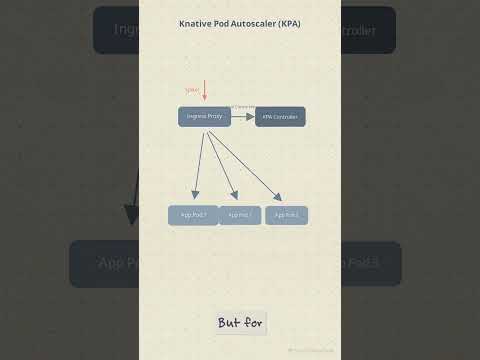
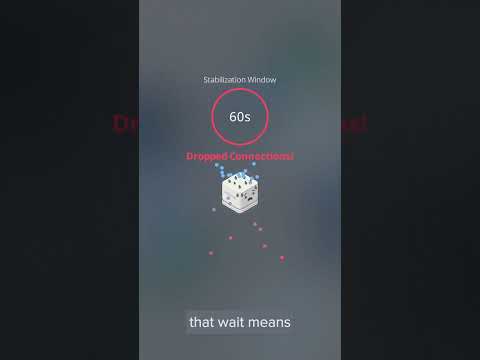
This architectural breakdown explores how the Knative Pod Autoscaler (KPA) defends p95/p99 tail latencies during traffic spikes by leveraging real-time in-flight request concurrency rather than lagging CPU or memory metrics. When sudden surges breach stable evaluation thresholds, Knative shifts from its standard 60-second averaging window into sub-second Panic Mode to rapidly scale workloads. In modern cloud native serverless platforms, this dual-mode autoscaling combined with scale-to-zero activator proxies provides critical cost efficiency alongside instantaneous resiliency against bursty microservice traffic.
Azure Verified Modules AVM
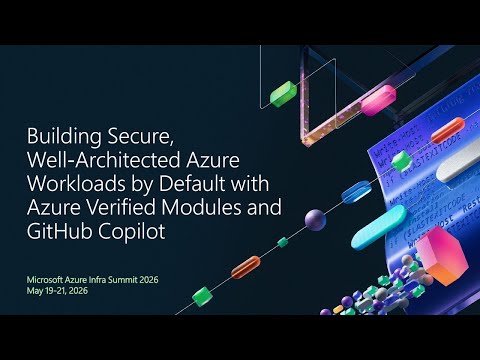
🎬 Building Secure, Well‑Architected Azure Workloads with Azure Verified Modules and GitHub Copilot
Architectural Summary
Azure Verified Modules (AVM) is the official Microsoft infrastructure-as-code module library for both Bicep and Terraform. This session explores how AVM standardizes deployments according to the Azure Well-Architected Framework by default, shipping with high-impact security defaults like zone redundancy and disabled public IPs. It introduces Spec-Driven Development with GitHub Copilot using the "Spec Kit" (an 8-step framework from constitution to implementation). By turning non-deterministic AI prompts into reliable, repeatable builds, architects can leverage AI as a trusted foundation for secure and compliant Azure workload orchestration.
VS Code
🎬 Remote VS Code with Dev Tunnels: access the editor from your browser [SPANISH CONTENT]
Architectural Summary
In this tutorial, Gisela Torres explains the architecture and application of VS Code Dev Tunnels to enable secure remote access to local development environments. Dev Tunnels establish a secure, encrypted connection to VS Code without requiring complex VPNs or firewall modifications, allowing developers to connect from any web browser or secondary editor instance. For 2026 developer productivity, this simplifies remote workspace orchestration and collaborative debugging in cloud-native platforms. [SPANISH CONTENT]