🎥 Fundamentals
Nubenetes V2 Elite Portal
You are browsing the AI-Curated V2 Elite Edition. Looking for the exhaustive list of references? Check out the V1 Historical Archive.
Welcome to the Fundamentals section of the V2 Video Hub. Explore curated high-density videos with architectural summaries.
Kubernetes
🎬 Kubernetes: The Documentary [PART 1]
Architectural Summary
This documentary chronicles the origin of Kubernetes from Google's internal cluster managers Borg and Omega, highlighting the pivotal architectural transition from virtual machines to containerized orchestration. Understanding this evolution is critical for modern cloud-native architects, as it reveals the foundational design patterns—such as the reconciliation loop, declarative APIs, and decoupled control planes—that continue to govern state-of-the-art distributed systems and platform engineering.
![Kubernetes: The Documentary [PART 1]](../../assets/external/img.youtube.com/vi/BE77h7dmoQU/hqdefault.jpg)
🎬 Kubernetes: The Documentary [PART 2]
Architectural Summary
This documentary details the pivotal technical evolution and open governance model that led Kubernetes to win the container orchestration wars over competitors like Docker Swarm and Mesos. For a 2026 Cloud Native context, it underscores the enduring value of design principles like declarative APIs, reconciliation control loops, and pluggable interfaces (CNI, CRI, CSI) that define modern platform engineering. Understanding these foundational decisions allows architects to better design scalable, vendor-neutral control planes for complex multi-cloud environments.
![Kubernetes: The Documentary [PART 2]](../../assets/external/img.youtube.com/vi/318elIq37PE/hqdefault.jpg)
🎬 Kubernetes New Contributor Orientation
Architectural Summary
This onboarding session details the essential governance, codebase organization, and automated release mechanics of the Kubernetes project, guiding new engineers through Special Interest Groups (SIGs) and the Prow-based ChatOps CI/CD workflow. It delivers a structured pathway for landing code and documentation contributions, establishing the foundational open-source engineering practices required to maintain and scale modern cloud-native infrastructure.

🎬 Kubernetes New Contributor Orientation
Architectural Summary
This orientation provides a comprehensive guide to navigating the Kubernetes contributor ecosystem, detailing the organizational structure of Special Interest Groups (SIGs), community workflows, and the automation tools like Prow and Tide that govern the PR lifecycle. Understanding these foundational processes is essential for platform architects and engineers aiming to successfully upstream patches, custom controllers, or performance optimizations to the core Kubernetes codebase in 2026.
🎬 Kubernetes New Contributor Orientation
Architectural Summary
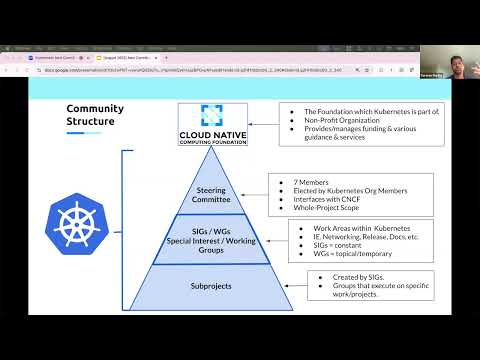
This orientation session provides an essential entry point for developers looking to contribute to the Kubernetes ecosystem, detailing the organizational dynamics of Special Interest Groups (SIGs) and the architectural workflow of the project. It covers the technical mechanics of the Kubernetes contribution pipeline, including Git workflows, Prow-based automated testing, and the lifecycle of Kubernetes Enhancement Proposals (KEPs) to ensure high-quality, scalable code contributions.
🎬 Kubernetes New Contributor Orientation for 2026-02-17
Architectural Summary
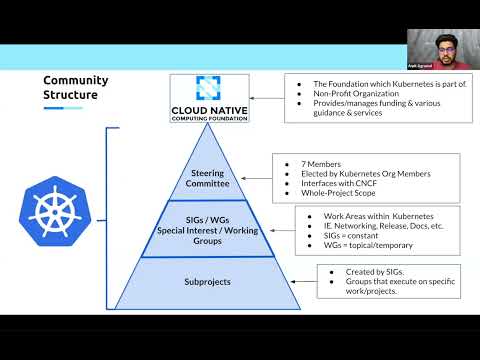
This orientation session provides an architectural overview of the Kubernetes upstream community, detailing the organizational hierarchy of Special Interest Groups (SIGs) and Working Groups. It guides new contributors through the technical contribution pipeline, highlighting Git workflows, Prow-based automation for PR testing and labeling, and the governance frameworks that sustain the core platform. Understanding these mechanisms is crucial for cloud-native engineers aiming to effectively drive features and maintenance within the ecosystem's foundational orchestrator.
🎬 Kubernetes New Contributor Orientation
Architectural Summary
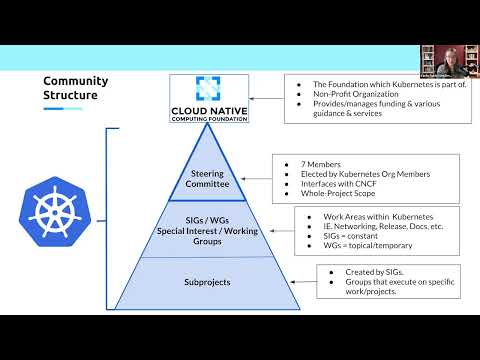
This onboarding session outlines the governance framework of Kubernetes Special Interest Groups (SIGs) and the technical workflows required to contribute to the ecosystem. It provides critical guidance on navigating community repositories, leveraging automated testing infrastructure (Prow), and adhering to code review standards essential for scaling cloud-native contributions.
🎬 Kubernetes New Contributor Orientation
Architectural Summary
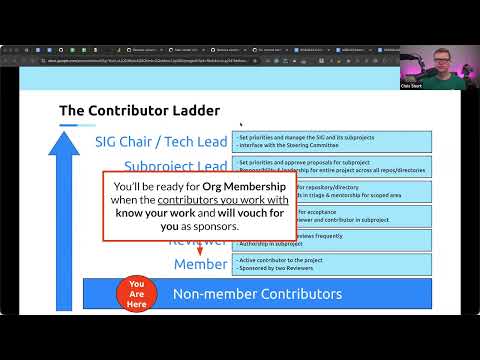
This orientation outlines the governance, SIG (Special Interest Group) structure, and contribution pipelines crucial for participating in the development of the Kubernetes ecosystem. It details the technical workflow of submitting contributions, including navigating the repository layout, adhering to OWNERS files guidelines, and leveraging Prow-based automated testing. Mastering these processes empowers cloud native architects in 2026 to successfully upstream optimizations, maintain enterprise forks, and directly influence upstream API standards.
🎬 Kubernetes New Contributor Orientation
Architectural Summary
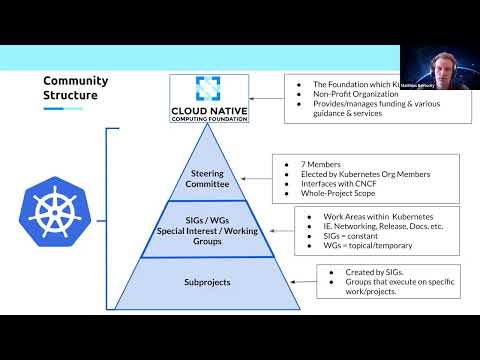
This orientation session provides a comprehensive guide for aspiring Kubernetes contributors, detailing the community's organizational structure across Special Interest Groups (SIGs) and Working Groups. It covers essential technical workflows, including GitHub PR submission pipelines, Prow-based automation testing, and the critical role of OWNERS files in codebase governance, establishing a clear pathway for developers to participate in cloud-native open-source development.
🎬 Kubernetes New Contributor Orientation
Architectural Summary
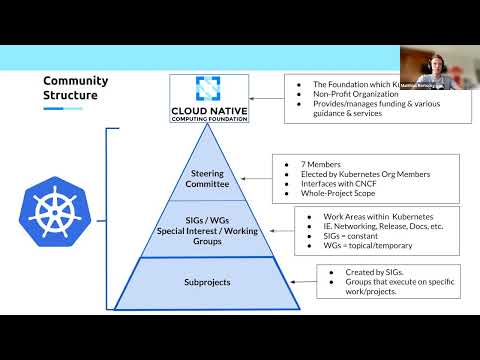
This session details the technical governance, repository structure, and automated testing workflows required for contributing to the Kubernetes ecosystem. It covers the SIG (Special Interest Group) organizational framework, the Prow-driven automation pipeline for pull requests, and the mechanics of OWNERS files, enabling contributors to effectively navigate the code review and release processes critical to maintaining cloud-native infrastructure.
🎬 Kubernetes New Contributor Orientation for 2026-03-17
Architectural Summary
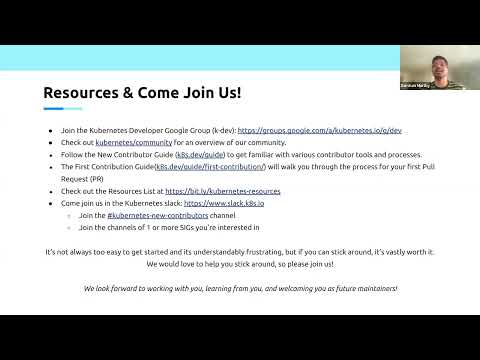
This onboarding guide details the governance, contribution lifecycle, and development workflows of the Kubernetes ecosystem, highlighting the role of Special Interest Groups (SIGs) and the Prow-based CI/CD automation pipeline. It offers essential technical instruction for configuring local development environments, interacting with community repositories, and adhering to testing standards required for upstream cloud-native contributions.
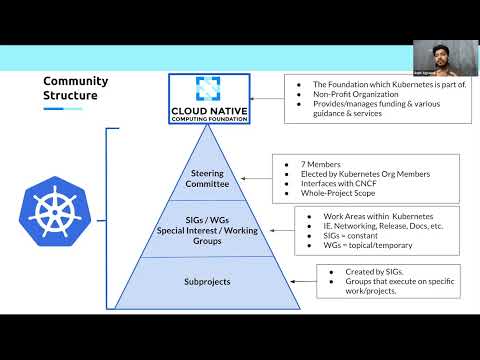
🎬 Kubernetes New Contributor Orientation
Architectural Summary
This onboarding session guides developers through the foundational governance, structure, and technical workflows required to contribute to the Kubernetes ecosystem. It details the organizational architecture of Special Interest Groups (SIGs) and demystifies the GitHub-based development flow, highlighting automated CI/CD tooling like Prow for PR testing and triage. It provides a strategic entry point for engineers looking to influence and maintain core cloud-native orchestration systems.
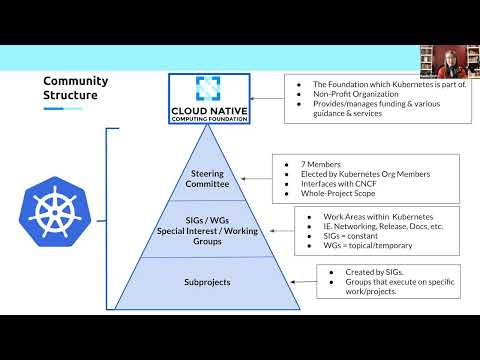
Spring Framework
🎬 How a Group of Developers Took Back Control from Enterprise Java | Spring: The Documentary
Architectural Summary
This documentary traces the architectural transition from heavyweight, monolithic Java EE application servers to the lightweight, dependency-injection paradigm of the Spring Framework. For a 2026 Cloud Architect, it provides essential historical context on how decoupling business logic from infrastructure paved the way for modern microservices and containerized environments. Understanding this evolution is critical for evaluating the trade-offs between complex enterprise standards and agile, developer-centric frameworks in cloud-native platforms.